
The rollout of 5G tchnology is sort of reshaping the global telecommunications industry, not in a small way but like, pretty dramatically. With quicker internet speeds, ultra low latency, and the ability to link billions of devices at the same time, 5G technology is nudging smart cities, autonomous vehicles, IoT applications, and more advanced digital services forward. Still, behind every “it just works” 5G network, there’s usually a strong and steady fiber optic infrastructure holding everything up.
Even though a lot of people link 5G with wireless communication, the real deal is that fiber optic cables are the backbone, like the foundation, of 5G networks. And as telecom companies keep pushing 5G coverage outward, the demand for dependable, top quality fiber optic infrastructure is rising fast across different regions, almost everywhere.
In this blog, we’re going to look at how 5G technology is creating this need for fiber optic networks, and also why businesses, and telecom operators are putting serious money into optical fiber solutions.
The process of selecting an optical fiber cable requires careful evaluation because it presents multiple challenges. The selection of an inappropriate cable will result in performance problems and increased maintenance expenses together with decreased network performance because there are diverse cable types and different structures and specifications that need to be assessed.
The guide provides essential information that enables you to select the appropriate optical fiber cable according to your specific project needs.
What is 5G Technology?
5G technology is basically the fifth generation of mobile network tech, sort of made to deliver faster data speeds, lower latency, and even higher network capacity with improved connectivity for all the smart devices. It also brings better network reliability, which is kind off important.
When you compare 5G to 4G, the 5G networks can deal with way more data traffic, and they enable real-time communication, in a sense. And that actually makes a difference for things like remote healthcare, industrial automation, smart transport, and even cloud gaming, where delays are not just annoying but can be costly too.
Why Fiber Optic Infrastructure is Essential for 5G
Fiber Optic Cables for 5G networks send information using light. This lets us communicate fast over long distances without losing much of the signal. The thing is, fiber optic cables are very good at this. Since 5G networks make a lot of data, the old systems that use copper cannot handle all the data that is being sent. Fiber optic cables are a choice for this because they can handle the high speed that 5G networks need.
Key Reasons Fiber Optics are Critical for 5G Technology:
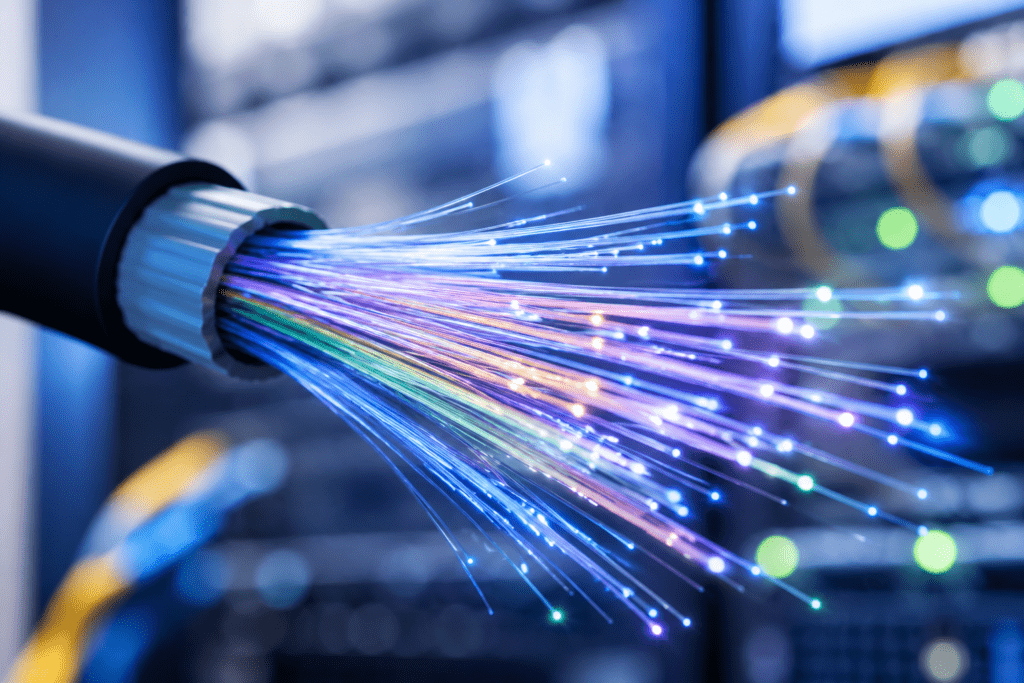
- High-Speed Data Transmission: 5G networks need fast connections between cell towers and data centers. Fiber optic cables give us the space to send lots of data without slowing down.
Regular cables can’t handle much data, as fiber optic cables. Fiber optic cables can deal with amounts of data and still work well and be reliable.
2. Low Latency Performance: One of the things about 5G is that it has really low latency. This is very important for things, like
- Autonomous vehicles
- Factories
- Online gaming
- Remote surgeries
- AI-powered systems
The reason we get such fast performance is because of the fiber optic infrastructure. It helps reduce delays when data is being sent and makes sure that people can communicate in time.
3. Support for Dense Network Architecture: 5G networks use something called cell technology. This means that phone companies have to install a lot cell towers and antennas than they did in the past.
Each small cell needs a fast fiber connection so that the network works properly. As more small cells are added we need to install fiber optic cables to support them. This is because 5G networks need a lot of fiber optic connections to work well.
The Role of Fiber Optic Cables in 5G Networks
Fiber optic infrastructure is really important for a 5G network. It helps a lot of components work properly.
Fronthaul Connectivity: The connection between radio antennas and centralized network units is called “fronthaul.” Fiber optics make sure that these components can talk to each other fast and without any interruptions. This is because fiber optics are very good at sending information
Backhaul Networks: Backhaul networks are like the roads that connect cell towers to the telecom network. Since 5G towers have to handle a lot of data, fiber optic cables are necessary to keep everything working quickly and smoothly. Fiber optic infrastructure is essential for 5G networks.
Data Center Connectivity: A lot of 5G applications use cloud computing and edge data centers. Fiber optics help these data centers talk to the telecom infrastructure quickly. This means that fiber optic infrastructure is very important for 5G applications. Fiber optic infrastructure supports the connection between these data centers and the telecom infrastructure.
Industries Benefiting from 5G Fiber Expansion
The growth of 5G fiber is helping a lot of people, not phone companies. It is also changing other industries.
- Smart Cities: Smart cities need things like:
- Traffic management
- Lighting
- Surveillance systems
- Environmental monitoring
5G fiber networks allow these systems to talk to each other quickly and on time. This is very important for cities. 5G fiber networks make it all work together.
2. Healthcare: Doctors can now see patients from afar and do surgeries with robots. They need 5G fiber networks to be very fast and stable. 5G fiber networks help doctors give care to patients. 5G fiber expansion is very good for healthcare.
3. Manufacturing and Industrial Automation: Factories are using machines that can think and talk to each other. 5G fiber networks help these machines work together smoothly. 5G fiber networks also help factories watch everything in time. This is very helpful for manufacturing and industrial automation.
4. Education and Remote Work: More people are learning online. Working from home. They need the internet to be fast and stable. 5G fiber networks give them the connection they need. 5G fiber networks are very good for education and remote work. They help people work together online and use cloud services. 5G fiber expansion is very important for education and remote work.
Growing Global Investment in Fiber Optic Infrastructure
Governments and telecom companies all over the world are putting a lot of money into laying down fiber to help 5G technology work better: Optical Fiber Infrastructure for Telecom Industry. Many countries are speeding up projects to improve internet access and help their economies grow.
Telecom operators are working on things such as
- Expanding fiber-to-the-home networks so people can get fast internet at home
- Laying down fiber-optic cables underground
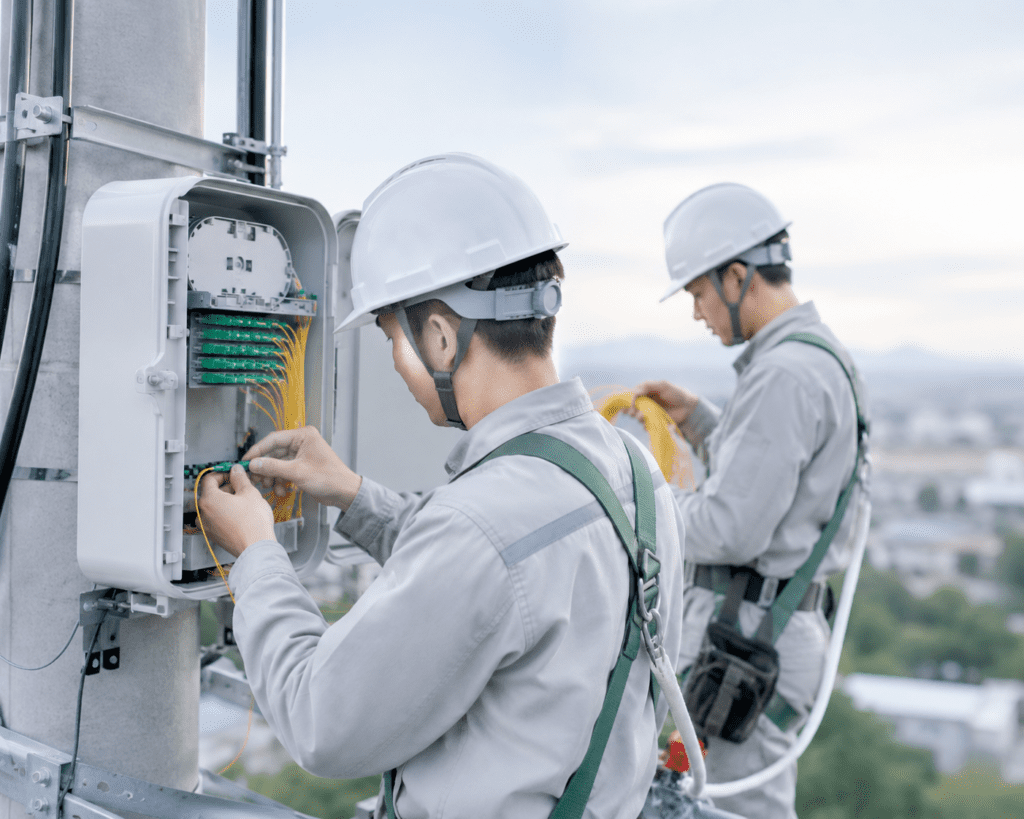
- Installing boxes that help connect fibers
- Making the basic telecom infrastructure better
- Getting internet to rural areas
All this money being spent on fiber is creating a lot of opportunities for companies that make optical fiber products and for the people who supply them with the things they need. The optical fiber products are really important, for this work.
Challenges in 5G Fiber Deployment
Fiber optic infrastructure is really hard to set up even though a lot of people want it.
There are problems that come with deploying fiber optic infrastructure.
- High Installation Costs: Fiber optic cables are expensive to lay down. This is because we need to dig trenches and buy equipment and hire people to do the job.
- Infrastructure Complexity: To make 5G work, we need a lot of cells that are all connected. This makes planning the infrastructure very complicated.
- Workforce Requirements: We need special technicians who know what they are doing to install and fix fiber optic cables. They also need tools to do the job.
- Rural Connectivity Issues: It is very hard to get fiber connectivity in areas. This is because these areas are away and it is expensive to get the equipment there.
However, the good things about fiber-powered 5G technology is worth it in the long run even though it is hard to set up fiber optic infrastructure at first. Fiber-powered 5G networks will be great.
Future of Fiber Optics in the 5G Era
As people start using 5G more and more, fiber optic cables will still be the base of how we communicate. New technologies like
- Artificial Intelligence
- Internet of Things
- Transportation
- Virtual Reality
- Edge computing
will make it necessary to have fiber networks that can handle a lot of information.
Companies that make sure telecom infrastructure is good and provide optical fiber solutions will be very important in helping the world change to digital. They will play a role in supporting this change everywhere. Fiber optic infrastructure will keep being the foundation of telecommunications and 5G adoption.
Conclusion
The expansion of 5G technology is really making the demand for fiber optic infrastructure go up all over the world. 5G technology offers connectivity, but it needs strong fiber optic networks to work properly. These fiber optic networks have to support communication that’s very fast and has very little delay.
Fiber optics are being used in a lot of places like telecom towers and data centers and even in cities and industrial automation. Fiber optics are becoming the support for the digital world we are moving into. Companies that invest in quality passive telecom infrastructure and optical fiber solutions are setting themselves up to grow and do well in the long term in the telecommunications industry, which is changing very quickly.
As the world gets more connected, the teamwork between 5G technology and fiber optics will keep changing the way we communicate and innovate and connect with each other over the world. 5G technology and fiber optics are working together to make the future of communication and innovation and global connectivity better.