
As fiber-optic networks keep expanding across cities, countries, and telecom infrastructure projects, picking the right cable protection and installation system has become more and more crucial. Two things that come up a lot are HDPE Ducts and Micro Ducts, but they are not really the same in practice.
Even though both are meant to shield optical fiber cables and help with fast, effective network deployment, they do different jobs. The decision about HDPE duct vs. micro duct usually comes down to cable diameter and count, the bigger network layout, how the crew is going to install it, and how much physical space is even available on site. And yes, it also depends on future expansion plans and the actual project requirements.
Understanding the difference between HDPE Duct vs Micro Duct helps telecom operators and contractors select the right ducting solution based on cable capacity, installation methods, available space, and future network expansion requirements.
For telecom operators, ISPs, contractors, and infrastructure providers, getting the distinction between an HDPE duct and a micro duct right can lower install headaches. It also supports better long-term reliability for fiber networks.
Let us now see the HDPE duct vs. micro duct—key differences.
What Is an HDPE Duct?
An HDPE duct (High-Density Polyethylene duct) is some sort of protective conduit used to house and guard optical fiber cables and other telecom cables.
HDPE ducts are manufactured from high-density polyethylene, a material that people often mention as being strong, flexible, resistant to chemicals, and just durable in general. Usually they get installed underground, in trenches, or sometimes with trenchless installation methods.
Depending on the project, HDPE ducts can hold different kinds and sizes of fiber optic cables, and it really depends on what’s being laid.
Typical applications include:
● Long-distance fiber-optic networks
● Metro and backbone networks
● FTTh and FTTx deployments
● Underground telecom infrastructure
● Road and highway crossings
● Data center connectivity
● Utility and infrastructure corridors
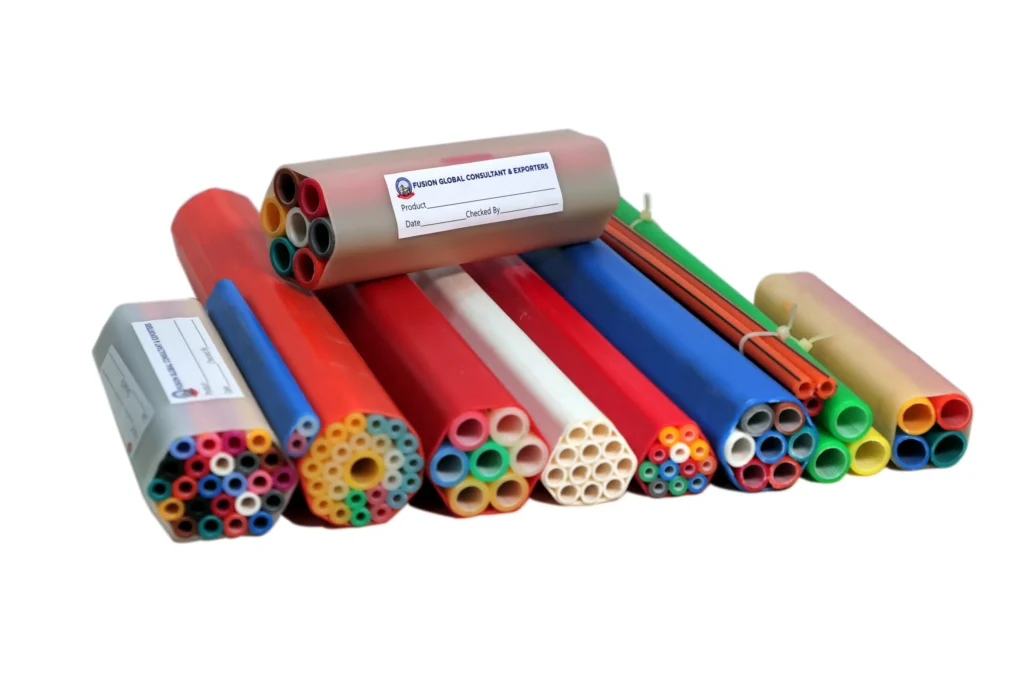
HDPE ducts can also be supplied as single ducts, multi-duct systems, bundled ducts, or duct configurations designed for specific network requirements.
What Is a Micro Duct?
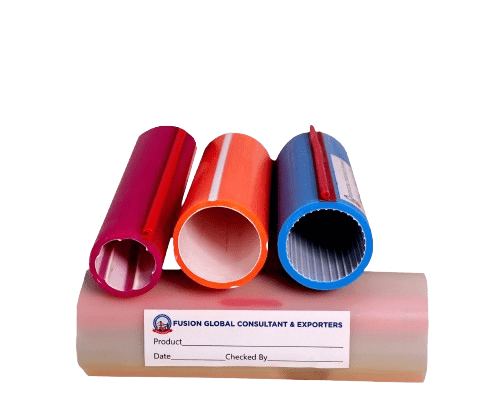
A micro duct is a smaller-diameter HDPE or similar polymer duct designed specifically for the installation of compact fiber-optic cables. Micro ducts are particularly useful in high-density fiber networks, where multiple small fiber cables need to be installed while making efficient use of available space. Instead of installing one large duct containing a large fiber cable, a network designer may use multiple microducts.
Fiber cables can then be installed individually by pulling or blowing them through the micro ducts, depending on the system design.
Micro duct systems are widely associated with:
● FTTH deployments
● FTTx networks
● Urban fiber networks
● High-density telecom routes
● Fiber blowing installations
● Future network expansion
● Areas with limited duct space
Their smaller size makes it kinda suitable for moments where space matters , installation flexibility is needed, and network scalability is more or less the whole point.
HDPE Duct vs Micro Duct: Key Differences
Even though both products are often used inside fiber-optic network infrastructure, what actually fits depends on the cable system, the path and route conditions, how it s installed, and what the project is aiming for, kind of overall.
1. Size and Diameter
HDPE Duct: HDPE ducts come in a pretty wide range of diameters, and yes, there are larger sizes too, made for conventional fiber optic cables. The exact required diameter is usually tied to cable dimensions, the installation requirements, and also the intended cable capacity, not just one of those factors.
Micro Duct: Micro ducts have smaller internal diameters; these are meant to work with compact fiber cables. Their dimensions are suited for setups where several small cable pathways are needed, kind of like a more segmented route plan.
When comparing HDPE duct vs. micro duct, internal diameter is one of the most important factors to consider, as it determines the compatibility of the duct with the selected fiber-optic cable.
2. Space Utilisation
HDPE Duct: Larger ducts can give a usable pathway for quite a lot of fiber cables, especially along backbone and metro routes, and when you want more room. If separate pathways are needed, or if later you expect extra capacity, additional ducts might get installed as well.
Micro Duct: Micro ducts are handy when space efficiency matters. Several ducts can be bundled together so you get multiple, individual pathways inside one compact install.
3. Cable Installation Methods
HDPE Duct: Depending on the duct and cable design, installation may involve cable pulling, blowing, or other suitable techniques. Route length, bends, friction, and cable handling limits should be considered.
Micro Duct: Micro ducts are commonly used with compatible fiber cables designed for blowing. Specialized equipment can assist cable installation through an appropriately prepared duct system.
4. Network Applications
HDPE Duct: Frequently used in backbone and metro networks, underground telecom routes, feeder sections, and projects requiring larger cable pathways.
Micro Duct: Commonly used in FTTH and FTTx access networks, dense urban deployments, and installations requiring multiple compact pathways.
5. Future Network Expansion
HDPE Duct: Future capacity can be planned by installing spare ducts or providing sufficient space for additional compatible cables. The amount of usable spare capacity depends on the original duct design and occupancy.
Micro Duct: Multiple individual pathways allow operators to deploy compatible fiber cables in stages. Unused micro ducts can be reserved for future network extensions.
6. Installation Requirements and Route Planning
HDPE Duct: The installation plan should be thought through around trench size, duct joints, how much bending is allowed, crossings, what the soil or burial conditions look like, and the cable installation approach you choose.
Micro Duct: Besides route planning, you also need to watch duct continuity, make sure connectors are compatible, respect bend limitations, handle sealing details, and if it's needed, then cover the fiber-blowing requirements.
When Should You Choose an HDPE Duct?
HDPE ducts are worth considering when the project needs a pretty standard duct route but also enough inner space for the chosen fiber optic cable, like not too tight, not too loose, you know.
They’re often a good fit for:
● Long-distance backbone and metro fiber routes, especially when the geometry is kind of conventional.
● Projects with larger fiber cables, where the usual assumptions may not hold.
● Underground infrastructure with space for the usual kind of ducting.
● Routes where a dedicated cable pathway is required, not shared, not improvised.
● Deployments where extra spare ducts can be included right from the original design stage, just in case.
Before you select anything, double-check the duct dimensional tolerances and the wall specifications as well, plus the mechanical requirements and the jointing arrangements. Also make sure it is compatible with the planned installation method, because it can matter more than people expect.
When Should You Choose a Micro Duct?
Micro ducts are kind of worth considering when the network design is going for compact routes and this flexible fiber placement thing.
They can match really well with situations like:
● FTTH and FTTx access networks, where those compact fiber pathways are actually helpful.
● High-density urban installations, especially when the underground space is tight and not much room shows up.
● Projects that need multiple separate fiber routes but are still within a compact setup, like everything has to stay in the same neighborhood.
● Phased network deployments, where cables are installed in stages as the demand keeps rising.
● Networks that use compatible fiber-blowing systems, so the cable installation isn’t a problem later.
Before you pick micro ducts, it’s smart to verify the internal diameter, the fiber cable compatibility, the bend radius, the connector system, and the installation requirements. That way the whole arrangement actually meets your project specifications, without surprises.
Conclusion
The choice between HDPE duct vs. micro duct should ultimately depend on the network design, cable specifications, installation conditions, and long-term capacity requirements of the project.
HDPE duct vs. micro duct both play pretty important roles in fiber optic network deployment, you know. HDPE ducts are usually picked for conventional cable pathways and the bigger network routes, while micro ducts give you a more compact way to route compatible fiber cables, especially in dense and scalable networks.
Honestly, the best choice usually lands on the technical specifications, plus what each project is trying to achieve. If you plan carefully, you can improve installation efficiency, streamline the cable routes, and still keep some space for later network upgrades.his shows the clear difference and use of HDPE Duct vs Micro Duct.
Looking for HDPE Ducts and Micro?
Fusion Global is an exporter and supplier of passive telecom products, supporting international telecom project requirements with HDPE ducts, micro ducts, bundled duct solutions, fiber-optic cables, FTTx products, Fiber Management System/ ODF, and other passive telecom products.
Share your project location, duct specifications, and estimated quantity to discuss your requirements with our team.